

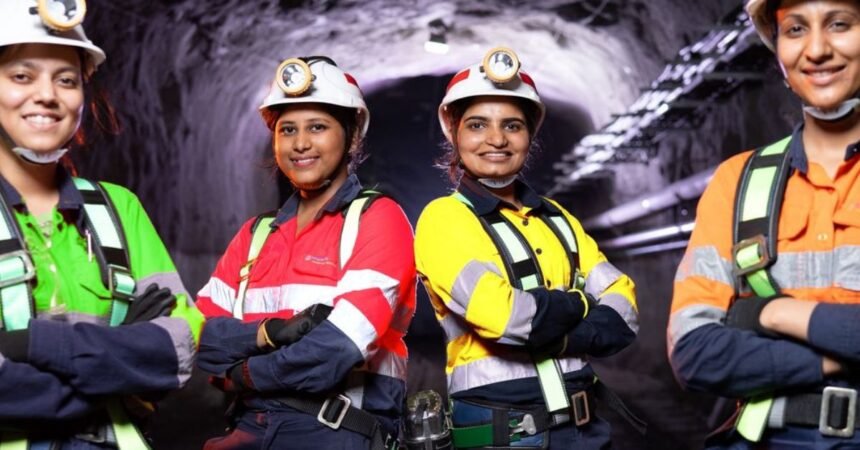
Bokaro : On the occasion of International Women’s Day, Vedanta Group has announced an ambitious plan to increase women’s representation in its workforce to 35% across all levels. The company also unveiled #HerAtTheCore, a nationwide campaign aimed at encouraging women to build careers in core sectors such as mining, metals, oil & gas, power and technology.
Women account for nearly 18% of the direct workforce
The move comes at a time when women remain significantly underrepresented in India’s industrial sectors. According to industry data, women account for nearly 18% of the direct workforce across industries, while their participation in core sectors like mining and metals stands at just around 6%.
Vedanta’s plans to increase women workforce
Vedanta said the campaign seeks to inspire more women professionals to explore opportunities in these traditionally male-dominated industries and contribute to India’s expanding industrial economy. Currently, women make up around 23% of Vedanta’s workforce, which is well above the industry average. The company now plans to increase this figure to 35% in the coming years, while working toward a long-term goal of achieving 50% gender representation.
More skill driven
Priya Agarwal Hebbar, Non-Executive Director of Vedanta Ltd, said India’s growth depends on the participation of its entire talent pool. She added that the company is not only increasing women’s representation but also creating systems, technology and support frameworks that enable them to succeed in core industries. Vedanta is also adopting advanced automation and digital technologies to make workplaces safer and more skill-driven, ensuring performance is based on capability rather than gender.
Promote women in operations
The company has already introduced several initiatives to promote women in operations, including all-women teams in aluminium production, women engineers in underground mining and women professionals managing power plant and safety functions. Vedanta also supports its female workforce through returnship programmes after maternity breaks, flexible work arrangements, spouse hiring policies in remote locations and leadership development initiatives.