


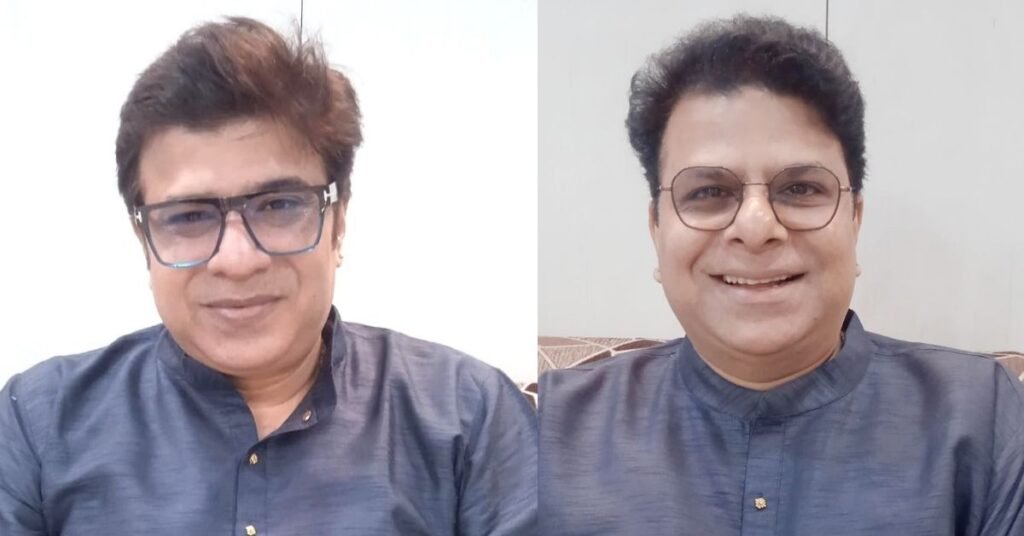
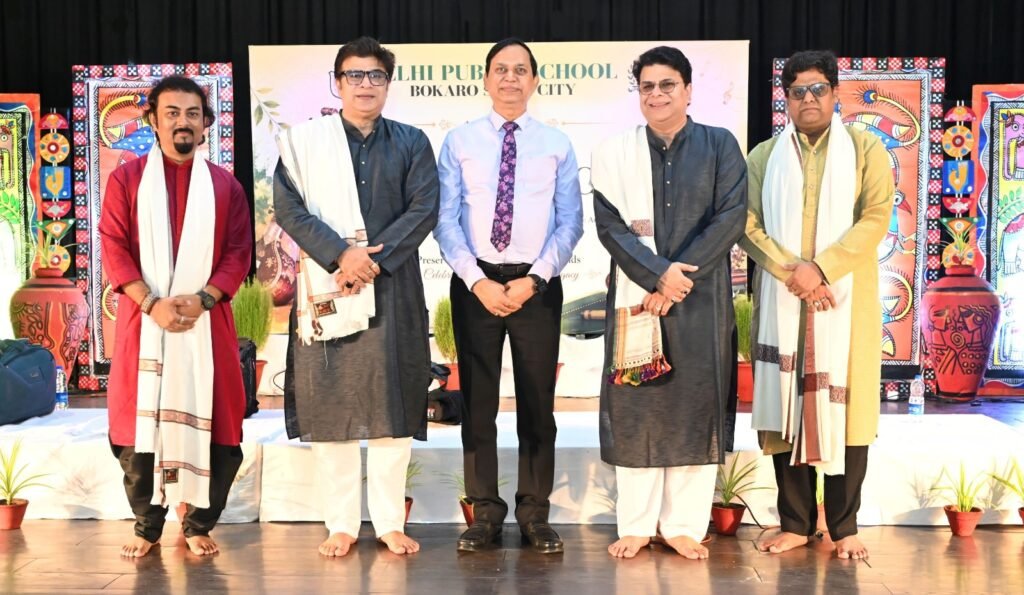
Bokaro: The celebrated Banaras gharana vocalists, Pandit Ritesh Mishra and Pandit Rajnish Mishra, sons of the late maestro Pandit Rajan Mishra, spoke exclusively to Deepak Jha (Journalist-cum-Public Relation Officer, DPS Bokaro) on Indian classical music, AI and the need to preserve India’s cultural heritage. During the one-to-one interaction at DPS Bokaro on Monday, they said Indian classical music is the mother of all musical traditions, and no technology, including AI, can replace the soul and authenticity of human musical expression. Here are excerpts from the interaction:


Q: Why do you consider Indian classical music the foundation of all Music ?
A: Indian classical music is the mother of all forms of music. It is an ancient musical tradition rooted in our scriptures, with ragas and raginis forming its foundation. Its depth and richness make it incomparable. It is an invaluable part of our cultural heritage and must be preserved for future generations.
Q: Why is it important to connect young people with classical music ?
A: Today, life is moving at a very fast pace and people are increasingly becoming disconnected from their roots. True cultural enrichment is possible only when we remain connected to our heritage. Young people should therefore be introduced to classical music and Indian traditions from an early age. Schools can play a major role in this effort.
Q: What do you think about people who do not enjoy classical music ?

A: Everyone may not necessarily like classical music, but everyone should respect it. It represents centuries of India’s artistic and cultural wisdom and deserves to be understood and preserved.
Q: Does artificial intelligence pose a threat to classical music ?
A: No. AI itself is not a threat to classical music. Technology can be useful when used responsibly, but its misuse is a concern. For instance, altering a singer’s voice to imitate a famous playback singer and using it commercially or otherwise is inappropriate. Such practices undermine the sanctity of music. No technology can truly replace the natural human voice and musical expression.
Q: How should musicians approach modern technology ?
A: Modernisation is necessary, but it should be used within limits. Technology should support creativity rather than replace the authenticity of artistic expression. We should adopt modern tools according to our needs without losing the essence of our musical traditions.
Q: Has Bollywood music moved away from classical music ?
A: Bollywood music has certainly changed with the times, but its fundamental connection with Indian classical music remains. Musical forms evolve according to changing tastes and circumstances, yet classical music continues to provide an important foundation.
Q: What is required for the revival of classical music and cultural awareness ?
A: The first requirement is a change in mindset. If we genuinely want classical music to flourish and cultural awareness to grow, society must develop greater respect and curiosity towards its own traditions. We need to value our heritage rather than viewing it as something belonging only to the past.
Q: How does it feel to return to Bokaro after 17 years ?
A: It is a very pleasant and joyful experience. Returning to Bokaro after such a long gap brings back many memories, and performing before young students here makes the visit particularly special.
Q: What makes jugalbandi so challenging ?

A: Jugalbandi is an extremely demanding form of classical music. It requires not only individual command over music but also exceptional coordination, understanding and sensitivity between the two performers. Maintaining musical dialogue while preserving the individuality of each voice requires years of practice.
Q: How are you carrying forward the legacy of the Banaras gharana ?
A: We belong to the sixth generation of a nearly 400-year-old musical tradition of the Banaras gharana. We were trained under the guidance of our father, Pandit Rajan-Sajan Mishra. For nearly three decades, we have been striving to take this rich tradition to audiences across India and the world.
Q: Which major platforms have you performed at ?

A: We have performed at several prestigious international platforms, including the BBC Proms at the Royal Albert Hall in London, Lincoln Center in New York and the 2002 Commonwealth Games. We are also ‘Top Grade’ artistes of All India Radio and Doordarshan.
Q: Which recent musical projects are particularly significant to you ?
A: We lent our voices to the widely recognised track ‘Mahadeva’ from the Grammy-nominated album ‘Rise’ and ‘Radha Tori Batiyan’ from the film ‘The Tashkent Files’. Such opportunities have helped us take the richness of Indian classical music to wider audiences.
Q: What message would you give young students ?

A: Explore modernity, but do not abandon your roots. Indian classical music is not merely a genre; it is a vast cultura